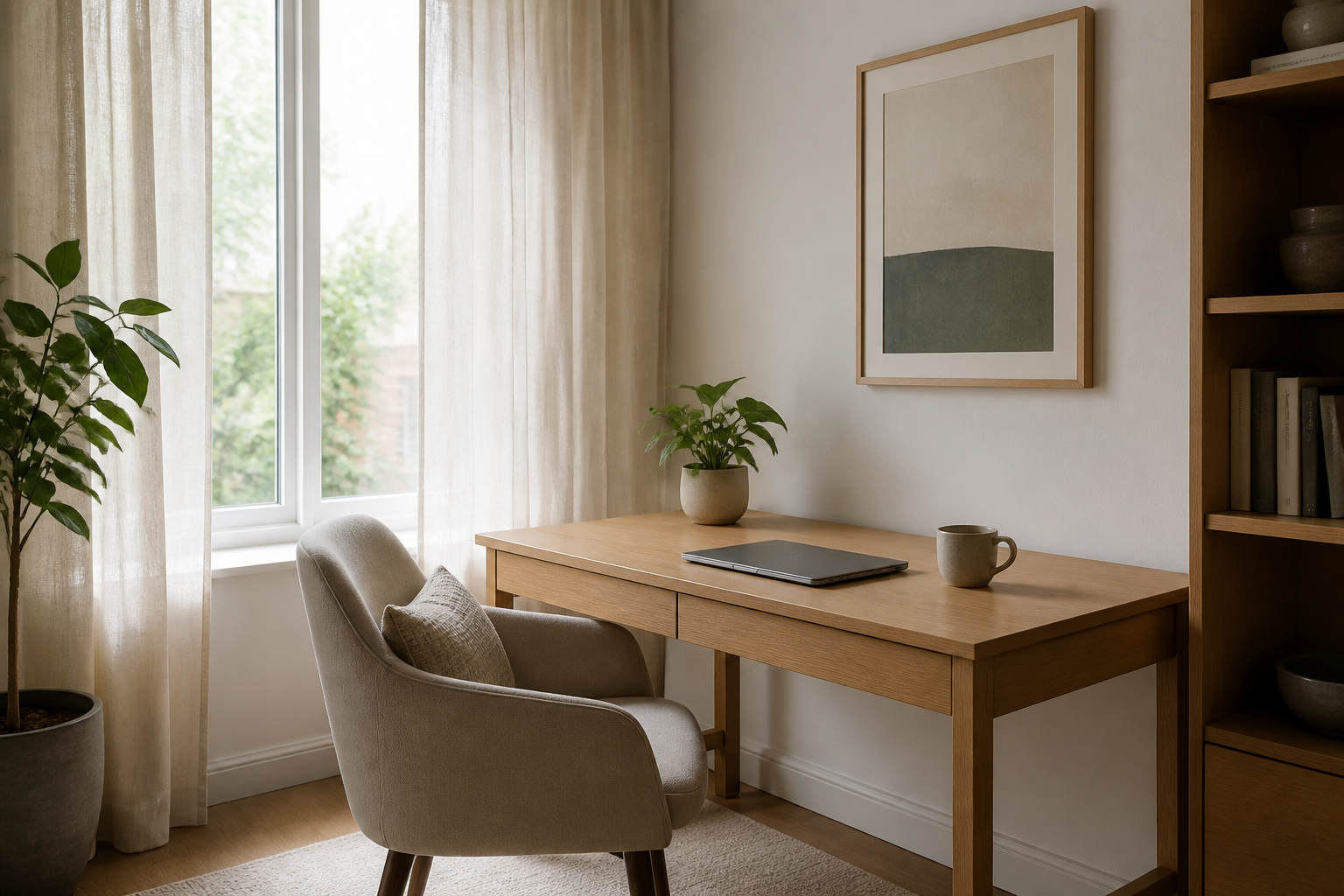
The home study setup advice industry has produced an enormous quantity of content about ergonomic chairs, monitor arms, smart lighting and aesthetic desk arrangements. Most of it is wrong about what matters. A student who buys the entire optimized setup will not study any better than a student who has done a few unglamorous things ... <a title="Designing a Home Study Setup That Actually Helps You Focus" class="read-more" href="https://universitylearningstore.org/2026/05/10/home-study-setup-that-helps/" aria-label="Read more about Designing a Home Study Setup That Actually Helps You Focus">Read more</a>
The home study setup advice industry has produced an enormous quantity of content about ergonomic chairs, monitor arms, smart lighting and aesthetic desk arrangements. Most of it is wrong about what matters. A student who buys the entire optimized setup will not study any better than a student who has done a few unglamorous things right. The home study setup that actually helps you focus is less expensive than the brochure suggests, and the differences come down to a handful of choices about location, signal, and habit.
The location question is bigger than the desk
The single most important decision in setting up a home study space is which room or which corner you will use. Almost everything else follows from this. A desk in a busy living room, even an ergonomic one with a perfect monitor setup, will produce less focused work than a folding card table in a quiet bedroom corner. The reason is environmental, not technological. A study space competes with the rest of your home for your attention, and the rooms where you do other things have already trained your brain to expect those other things.
The students who get the most out of home study are usually the ones who have managed to claim a space where studying is the only thing that happens. The space does not have to be large. A two-foot by three-foot corner of a bedroom can be a real study space if it is consistently used for nothing else. The same desk used for studying, video games, social media browsing and meals will, in practice, be used mostly for the activities that are easier to start.
For students in cramped living situations where a dedicated space is not possible, the workable substitute is a portable kit: a specific set of items (notebook, water bottle, headphones, a particular pen) that come out together when studying begins and go away together when studying ends. The kit becomes the spatial signal that the brain learns to read, even when the physical location varies.
What the desk actually needs
The functional requirements for a study desk are modest. A flat surface big enough for an open laptop and a notebook side by side. A chair that lets you sit upright without slouching. Enough light to read by without straining your eyes. A power outlet within reach. That is most of it.
The temptation is to optimize beyond these requirements. A standing desk option, a second monitor, a mechanical keyboard, a laptop stand, a desk pad, an LED light bar – each of these can be defended on its merits, and none of them will change how much you actually study. The students who report the deepest focused work are not the ones with the best equipped desks. They are the ones who have learned to sit down at a basic desk and start.
The diminishing returns curve on desk equipment is steep. The first $200 spent on a usable chair, a decent lamp and basic storage produces real benefit. The next $2,000 produces incremental improvement that you will not notice once you have stopped admiring the setup and started using it.
The signal-to-noise problem
The home is full of signals competing for attention. A phone on the desk is a signal that messages and notifications matter. A laundry basket in view is a signal that there are other things to do. A pile of mail waiting to be sorted is a signal that the desk is a workspace for many kinds of work, not specifically for studying.
The students who focus well at home tend to be ruthless about removing these signals during study sessions. The phone goes into another room or into a drawer. The visible reminders of other tasks get cleared or hidden. The desk gets reset between sessions to a configuration that says only one thing: this is where you study.
The effort to maintain this reset can be tedious, and the students who sustain the practice usually attach it to a small ritual. The phone-in-the-drawer move happens every time, in the same way, as the study session begins. The same playlist starts. The same drink is poured. The brain reads the ritual as the start signal, and the first few minutes of focus become easier than they otherwise would be.
The internet is the hardest part
For most students, the largest single source of distraction is not the home environment but the internet on the same device they are studying on. The laptop that holds the textbook also holds every social media account, every messaging app, every news site, every video platform. Willpower is a poor defense against a tool that has been engineered by some of the most sophisticated companies on earth to capture attention.
The defenses that work tend to be structural rather than behavioral. A separate browser profile that has only the sites and tools needed for studying, with everything else logged out and unavailable, reduces the friction of staying focused. Browser extensions that block specific sites during set hours produce a real reduction in time lost. Some students find that switching to a different device for studying, one without the social applications installed, is the most reliable solution.
The harder version of the problem is the legitimate online tasks that interrupt study. A quick check of email to see if a professor has responded becomes a 20-minute detour through the inbox. The look-up of a single fact in a search engine becomes 40 minutes of articles, none of them about the original topic. Students who study well tend to batch these tasks. The email gets checked at scheduled times, not whenever the impulse arises. The look-ups get written down on a list and addressed at a break point.
The lighting question
Lighting is the equipment category where modest investment produces the most consistent benefit. A study space lit only by an overhead fixture and the laptop screen produces eye strain and a vague feeling of dimness that erodes attention over a long session. A second light source – a desk lamp with adjustable arm, a floor lamp behind the chair, even a clip-on book light – fixes most of this.
The color temperature matters too, though the cheap-and-good answer is to use cooler light during work sessions and warmer light afterward. Lamps with adjustable color temperature have become inexpensive, and the difference between studying under 5000 Kelvin light and studying under 2700 Kelvin light is noticeable once you start paying attention to it.
Natural light, where available, is better than any lamp. A desk near a window, used during daylight hours, lets the body’s circadian system regulate itself in ways that artificial light cannot fully replicate. For students with the option, the morning study session at a window-facing desk is often the most productive session of the day.
The chair compromise
Ergonomic chair marketing has convinced many students that a $1,000 office chair is required for serious work. It is not. What is required is a chair that lets you sit upright with your feet flat on the floor, your forearms parallel to the desk, and your screen at roughly eye level. Most of this is about adjustment and posture, not about the chair itself.
A basic adjustable office chair from a midrange office supply retailer, set up correctly, will support several hours of comfortable focused work. The expensive chair will too. The difference between them is most noticeable when you sit for eight hours straight, which most students rarely do.
The more important variable is movement. A student who stays seated for three hours straight will fatigue regardless of chair quality. The same student who breaks every 45 minutes to stand, walk for two minutes, and return to the desk will sustain focus for longer total study time. The break is not a reward; it is part of the setup.
Sound
Background sound is one of the most personal pieces of the setup. Some students focus better in silence, some with instrumental music, some with ambient noise like rain or coffee shop chatter. The honest answer is that you have to experiment to find what works for you.
The unhelpful default is to keep whatever sound was already playing when the study session began. The lyrical music that was good for cooking is not good for studying. The podcast that was good for commuting is not good for reading dense material. The students who manage their sound deliberately, with a specific music or noise choice for studying that is not used for anything else, often find that the audio itself becomes a focus cue.
What this all adds up to
The home study setup that helps you focus is built on four things: a consistent location used only for studying, a small set of equipment that meets the actual functional requirements, structural defenses against the internet’s pull on your attention, and a ritual that signals the start of focused work. None of these require expensive purchases. All of them require some thought and consistent practice.
The students who get the most out of working from home tend to have iterated on these basics for a semester or two. The setup that works for them at the end of sophomore year is rarely the setup they started with. The right approach is to start simple, pay attention to what is interfering with your focus, and adjust. The desk that you want six months from now is one you will find by living with the desk you have now.
